skip to main content

Field Site:
Constellation Inlet, Union Glacier, Antarctica

The GLASS Project is supported by the Brinson Exploration Hub, with contributions from the Resnick Sustainability Institute, the National Geographic Society, EarthScope Consortium, MIT, and Antarctic Logistics and Expeditions (ALE).
Dates:
November 26 - December 12
Field Team:
Zhongwen Zhan (Caltech), Joel Steinkraus (JPL), Chris Lefler (JPL), Luis Pereira da Costa (Caltech), Gerik Kubiak (JPL), Auden Reid-McLaughlin (Caltech), Andy Klesh (JPL), Soyeon Park (Caltech), Thatcher Chamberlin (MIT), Galen Kaip (Earthscope), Marley Parker (Caltech)

December 3, 2025

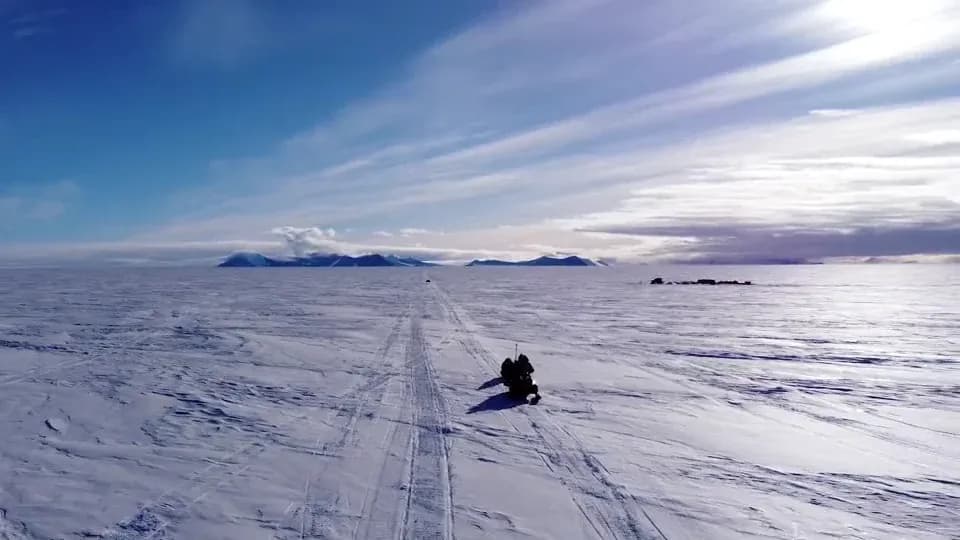
Constellation Inlet, Day 4

Credit: Marley Parker, Caltech

Day 4 marked a major transition point for the GLASS campaign, with the final pushes to complete instrument deployment and move into the active survey phase. The day began with several key objectives: finishing the STRYDE node array, conducting an early-afternoon GPR transect, beginning deployment of the SmartSolo geophone array, analyzing PEG data from the high-tide and low-tide shot sets, and preparing for the active-source survey operations scheduled to run continuously over the next several days.

By the end of the day, the STRYDE array reached full deployment - all 500 nodes installed across the survey area. This achievement officially cleared the way for the active-source portion of the campaign to begin. Seventeen of the twenty SmartSolo nodes were also deployed, with the remaining three scheduled for completion tomorrow. Once these are in place, every major array in the GLASS experiment will be active in the field. Beginning midday, the team entered the cadence that will define the next several days: PEG shots for approximately 50 minutes every two hours, running 24 hours a day through December 5 to capture the full tidal range. Discussions are ongoing about the potential deployment of additional fiber arrays, and the team is also refining the plan for PEG transport during the mobile survey scheduled to begin on December 6.

The day also brought a set of especially compelling scientific results, with both the DAS and GPR systems capturing clear signatures relevant to grounding-line behavior. These findings are summarized below, directly in the words of the team members leading each analysis.

Difference in seismic reflection energy recorded by the DAS array at high tide and low tide. Changes in the reflection amplitude reveal the upstream and downstream limits of the grounding line, allowing the team to track how its position shifts with the tides.

Auden Reid-McLaughlin - Early DAS Results

"We are looking at a simple schematic of the ray paths of the seismic waves through the ice and reflecting back up to our receiver. Depending on the grounding line location, the amplitude of the reflection will change with the tides because of the different reflectivity between ice and rock on the grounded side and ice and water on the floating side. By taking the difference of the recorded reflection, we can clearly see the upstream and downstream extents of the grounding line.

The map view shows where these points are in space. As we perform more shots at different tidal heights, we will begin to fill out the path of the grounding line migration upstream and downstream. We will get a time lapse of the position versus time, which has never before been achieved."

Map created by Caltech student Soyeon Park using satellite InSAR data, showing the grounding-line region at Constellation Inlet. The GLASS DAS cable, PEG shot location, and the grounding-line positions inferred from high- and low-tide seismic reflections are overlaid.

Thatcher Chamberlin - GPR Results

"This is the radiogram from our second transect with the SORA ice-penetrating radar. We're really excited about this result! We were traveling by snowmobile at 7 kph, so this radargram covers about 3 km - 1.5 km upstream and downstream of camp. The thing to look at here is the deepest, brightest reflections in each column - those are reflections from the ice bed."

Ice-penetrating radar transect showing the bed of the ice sheet beneath Constellation Inlet. The bright reflector marks the ice–bed interface, which varies sharply from ~1150 m to ~1600 m depth within just a few kilometers - evidence of crossing the grounding line.

"What's really interesting is that the depth varies significantly across this relatively short 3 km section. There's a good bed reflection at about 1150 meters depth at time = 0, which we can see beginning to slope down as the snowmobile heads downstream. We lose the reflection for a while, but when we pick it back up, the depth is much deeper at about 1600 meters! The ice stays about that thickness for the rest of the transect, and the bed reflection becomes much brighter (high return power), most likely indicating a strong reflection off conductive salt water. In other words, this radargram shows us crossing the grounding line.

We got a picture similar to this yesterday, but today's image has a clearer upstream bed and comes from a single transect instead of an assembly of shorter sled rides."

Thatcher Chamberlin (MIT) operating the ice-penetrating radar during a GPR survey at Constellation Inlet.
Credit: Marley Parker, Caltech

December 2, 2025

Constellation Inlet, Day 3

Credit: Marley Parker, Caltech

Day 3 focused on continuing STRYDE node deployment, completing the tap test on the initial 1.5 km fiber section, finishing installation of the remaining GNSS stations, building the DAS power station, and relocating the DAS system to the start of the 5 km fiber line. The team also planned a low-tide GPR transect and prepared to deploy the stationary PEG stand at the –0.5 km point upstream of the DAS array.

By the end of the day, approximately 330 STRYDE nodes had been deployed, with full array completion expected tomorrow. The fiber tap test was completed successfully, and both the DAS system and its power station were relocated and set up on the 5 km line. The low-tide GPR transect produced clear images along the entire route, with additional transects planned as resources allow. The stationary PEG stand was installed at the –0.5 km mark, and the team prepared late-night shot sets aligned with high and low tides to evaluate the planned shooting location.


December 1, 2025

Constellation Inlet, Day 2, Full 5 km Fiber Successfully Deployed

Day 2 began with several core objectives: initiating deployment of the STRYDE node array, evaluating PEG source characteristics from the back of the Tucker, and continuing GPR tuning ahead of the full transect. The GPR sled completed several short test runs, performing well and revealing a range of bed depths along the upstream portion of the track, though additional tuning will be needed. STRYDE deployment began shortly afterward but was paused when the deployment system's batteries ran low; during this downtime, the team shifted effectively to other tasks and deployed four GNSS stations, nearly half of the planned ten-station array.

A PEG test using the smaller 18-inch plate was conducted from the back of the Tucker, with data recorded on the test fiber via the low-SWaP system to support active-source characterization.

The day's major milestone was the successful deployment of the full 5 km primary fiber line across the grounding line, a key component of the larger GLASS measurement campaign. With steady progress across multiple instruments, priorities were set for continued STRYDE deployment, further GPR tuning, and PEG data analysis in the days ahead.

Field Milestone: GLASS 5 km Fiber Deployment Across the Union Glacier Grounding Line. Credit: Marley Parker, Caltech
Chris Lefler celebrates the successful deployment of the 5 km fiber line
Credit: Joel Steinkraus, Caltech

November 30, 2025

Constellation Inlet, Day 1 Activities

The first full day in the field brought steady progress across all major systems. Early in the day, the team deployed the GPS base station and radio repeater near camp, establishing the communications and positioning backbone for the work ahead. The 5 km bamboo pole line - marking the GPS coordinates of the planned fiber-optic route -was fully installed, providing a clear visual reference across the ice.

Credit: Marley Parker, Caltech

By midday, approximately 1.5 km of test fiber had been laid out, with checks confirming good coupling to the ice surface. The DAS system was brought online and began collecting initial measurements along this section. A PEG test at a 1 km offset followed shortly after, giving the team a first look at source behavior and transport characteristics in the snowpack.

The day concluded with successful assembly and activation of the GPR sled. Its first test immediately produced encouraging results, imaging the bed at roughly 1600 meters depth and setting the stage for the upcoming grounding-line transect.

Credit: Marley Parker, Caltech

November 29, 2025

Constellation Inlet Arrival, Primary Field Site

Aerial view of the Constellation Inlet camp from the second Twin Otter shuttle aircraft from Union Glacier.
Credit: Galin Kaip, Earthscope Consortium, Caltech

By late afternoon on Friday the 28th, all gear had been repacked, weighed, and staged for an early departure to the newly established field camp at Constellation Inlet. The morning meteorology report cleared the way, confirming a post-lunch flight window aboard a pair of Twin Otter aircraft. With the timing set, the team spent the next few hours making final preparations, including loading the Tucker-pulled sled with the bulk of the scientific equipment that would take the slower, overland route to meet them at the site.

After a final lunch in the incomparable Union Glacier dining tent, the team boarded the two aircraft and lifted off on the short ten-minute flight eastward. From the air, they caught their first glimpses of the terrain beyond Union Glacier—broad crevasse fields radiating outward from the mountains, the Tucker making its steady crawl across the ice, and eventually the first outlines of the Constellation Inlet camp itself. The most prominent feature was the ALE-deployed field laboratory positioned at the edge of camp, a central workspace that would support the scientific operations for the weeks ahead.

Credit: Marley Parker, Caltech

Upon landing, the team received a brief orientation to camp life before the Tucker arrived, allowing them to unload and stow the incoming gear. With logistics squared away, the group turned immediately to the work they had traveled so far to begin. The focus for this "Day 0" period centered on establishing initial infrastructure: deploying the GLASS camp power station, beginning construction of the ground-penetrating radar (GPR) sled, and setting up the DAS instrument to continue final checkout testing. The evening brought a sense of momentum - the first steps completed toward the full scientific campaign.

GLASS Field Camp at Constellation Inlet. Credit: Marley Parker, Caltech


November 27, 2025 - November 28, 2025

Union Glacier Camp

The following two days in Union Glacier were focused on one primary objective: make sure all of the subsystems were ready to go into the field the morning of 11/29. The execution of this plan fell into place around the UG daily agenda. Meals at 0800, 1300, and 1900, quiet hours from 2300 to 0700. The major subsystem team groups divided up and focused on their assigned areas. The AP Res and towed radar system were checked out and measurements taken at Union Glacier. The GNSS stations had their power systems evaluated by ALE staff and had all of its batteries charged and installed so that they were ready to deploy. SmartSolo and STRYDE geophones were charged and several units were deployed to a large open area known as "The Playground." The active source was fit checked with its stationary mount and also with the ALE vehicles tow hitch. Finally the DAS and its power system underwent a series of tests, culminating in a full system check where the DAS power system, including batteries and solar panels, were used to operate both the lowSWAP DAS and traditional Optasense and DAS in order to support the evaluation of how how well the deployment system coupled the fiber to the ice. By mid-day on the second day most systems (other than the large DAS set) had already concluded and much of the team's focus pivoted to beginning to repack all the equipment in advance of the move down to Constellation Inlet planned for 11/29.

The GLASS team conducts end-to-end system checkouts of the Distributed Acoustic Sensing (DAS) system, STRYDE nodes & SmartSolo geophones, the active-source Propelled Energy Generator (PEG), and the radar system prior to deployment to Constellation Inlet. Credit: Marley Parker, Caltech


November 26, 2025

Antarctica Arrival, Part 2, Union Glacier Camp


November 26, 2025

Antarctica Arrival, Part 1

Antarctica Arrival
Aerial view of fractured sea ice and narrow leads as seen from the GLASS team's flight to Union Glacier.
Credit: Joel Steinkraus, Caltech

8:15 was the predefined pickup time for the airport, but well before then team members began lining their gear up in the lobby of the Cabo de Horno hotel. The row of red gear bags, holding the warmest set of outer layers issued to the team by ALE, served as a tally of those eagerly awaiting the eminent departure. Like clockwork, the bus arrived and with a precision necessary for the blustery morning, the team loaded their bags onto the vehicle and set off to the airport. Airport security check-in ran smoothly and the short wait at the terminal passed quickly as eager members of many teams introduced themselves and chatted about how fate had conspired to bring each of them to this point. Small vans delivered groups of 9 at a time to the plane for boarding as gusty winds swirled around its landing gear and boarding staircase. Gear was stowed, seats were taken, and then, at 12:30 local time, the plane took off. Excited conversations faded to a mellow tone and some expected dozing as the initial adrenaline rush subsided. At two and a half hours into the flight however, the first trace of Antarctica became visible and the energy level soared once more.

Antarctica Arrival
A solitary iceberg floating on the starboard side of the plane acting as emissary and heralding the arrival of the 8.5 million sq mile continent following in its wake.
Credit: Joel Steinkraus, Caltech

Soon dense ice pack and small mountain peaks streamed forth as people pressed against windows to witness the first approach. Over the next hour and a half the ice pack solidified into continuous, white, glacial sheets and small peaks gave way to the Sentinel Mountain range and Mt Vincent, the tallest peak in Antarctica. Fully in awe of the arrival of this new world the plane began its descent to Union Glacier and everyone donned their cold weather gear in preparation of those first steps out onto the fabled blue ice runway which had been spoken of for so long. The final descent into Union glacier presented even more alien terrain with patches of blue ice broken up by crevassed regions seemingly bursting forth from within. The plane's wheels touched briefly, hesitated, then touched again. Decelerating to a slow crawl the call came over the intercom which all had waited for: "Ladies and gentleman, welcome to Antarctica."


November 25, 2025

Punta Arenas, Day 2

Twenty-four hours after the Caltech/JPL team arrived in Punta Arenas-and just thirty hours before the planned departure to Antarctica, Thatcher Chamberlin, the final member of the GLASS field team, reached the southern tip of South America after his own multi-day journey. Early that morning, he completed his gear check, and soon after, he and the rest of the team brought their duffels to ALE for check-in ahead of the next day's flight. With only the essentials kept aside for the day and the clothing they would wear on the flight, the team handed over their bags - one of the final logistical steps before departure.

Baggage Handoff
Thatcher Chamberlin (MIT) and Joel Steinkraus catching up during baggage handoff.
Credit: Marley Parker, Caltech

Once all gear was staged for loading, the group gathered to review the project's scientific objectives, outline priorities for the first days on the continent, and share one last meal together in South America.

With stomachs full, the team stepped outside to watch the final sunset they would see for the next seventeen days. Afterward, the GLASS team retired for the night, ready for the transition to Antarctica to begin.

GLASS Pre-Deployment Science Meeting, Punta Arenas, Chile

November 24, 2025

Punta Arenas, Day 1

With ten of the eleven team members now gathered in Punta Arenas, the GLASS team reconvened in the late morning of November 24th, only a few hours after the group of eight had landed, to review their cold-weather gear. This equipment is essential for operating safely in Antarctica, and the elite guides from Antarctic Logistics and Expeditions (ALE) methodically checked and re-checked every item to ensure the team was properly outfitted for the conditions ahead.

Once the gear inspections were complete, ALE led a series of briefings outlining the itinerary and key milestones for the final 40 hours before the planned departure to Antarctica. It was a full and productive day, capped with a team dinner that marked the first moment of true pause since the journey began. That night, the team finally had the chance to settle in and get a full night's rest-much needed before the work to come.

ALE HQ
Auden Reid-McLaughlin and Soyeon Park at the Antarctic Logistics & Expeditions (ALE) headquarters in Punta Arenas.
Credit: Marley Parker, Caltech

November 22, 2025

Pasadena Team Departure

The morning of November 22nd began quietly, with the eight Caltech/JPL members of the GLASS team gathering at 8:00 a.m. at the loading dock of Caltech's Resnick Sustainability Center. The moment carried some weight: eleven months had passed since the project was selected by the Brinson Exploration Hub, and exactly ten months since the project kick-off. Now, the bulk of the team was setting off for Chile, the final staging point before Antarctica.

GLASS Departure
Caltech and JPL team members prior to departure. Back row, left to right: Andy Klesh, Luis Pereira da Costa, Zhongwen Zhan, Gerik Kubiak, Soyeon Park. Front row, left to right: Joel Steinkraus, Chris Lefler, Auden Reid-McLaughlin.
Credit: Rachel Etheredge, Caltech

With the other three members of the eleven-person field team already on the ground in Chile, the Caltech contingent began a 33-hour sequence of flights-first from Los Angeles to São Paulo, then onward to Santiago, and finally to the southern city of Punta Arenas, arriving at 3:30 a.m. on November 24th.

Bleary-eyed but relieved to see all 20 checked bags arrive intact, the team stepped out to a faint, early glow on the eastern horizon and made their way to the hotel. A few hours of rest awaited them before they would begin the final preparations for the onward journey to Antarctica (Planned for November 26th).